
We all love a fluffy cat. But when “fluffy” starts to become “overweight,” it can have a significant impact on your cat’s health and quality of life.
Feline obesity is one of the most common health conditions seen by veterinarians. Unfortunately, many owners don’t realise their cat has gained too much weight because it happens gradually over months or even years.
The good news? Recognising the signs early and making small lifestyle changes can help your cat live a longer, healthier, and happier life.

Carrying excess weight places additional strain on your cat’s body and increases their risk of developing:
Even losing a small amount of weight can improve your cat’s comfort and overall wellbeing.
One of the simplest ways to assess your cat’s body condition is by gently feeling their ribs.
In a healthy-weight cat, the ribs should be easy to feel beneath a thin layer of fat, similar to feeling the back of your hand.
If you need to press firmly to find them, your cat may be carrying excess body fat.
Look at your cat from above while they’re standing.
Healthy cats should have a noticeable waist behind their ribs. If your cat’s body appears oval, round, or barrel-shaped with little waist definition, they may be overweight.
From the side, a healthy cat should have a gentle abdominal tuck.
Many cats have a small primordial pouch – the loose flap of skin that hangs near the back of the abdomen. This is completely normal and should not be confused with obesity.
However, a large, rounded abdomen that hangs significantly lower may indicate excess body fat.
Cats carrying extra weight often become less willing to:
While ageing can naturally reduce activity levels, obesity often makes movement more difficult and less enjoyable.
Cats are naturally meticulous groomers.
Overweight cats may struggle to reach parts of their body, particularly around the lower back and hindquarters.
This can lead to:
Difficulty grooming is often one of the first signs owners notice.
Helping your cat lose weight should always be done gradually and under veterinary guidance.
Here are some simple ways to get started:
Measure Every Meal
Instead of guessing portions, use a measuring cup or kitchen scale to ensure your cat receives the correct amount of food.
Avoid Free-Feeding
Leaving food out all day makes it difficult to control calorie intake. Feeding measured meals is usually more effective for weight management.
Choose an Appropriate Diet
Some cats benefit from specially formulated weight-management diets that provide fewer calories while still meeting their nutritional needs.
Never place your cat on a crash diet—rapid weight loss can be dangerous.
Encourage Daily Exercise
Aim for two or three short play sessions each day using toys such as:
Just 10–15 minutes of play can make a big difference.
Make Mealtimes More Active
Puzzle feeders and food-dispensing toys encourage cats to move more while slowing down eating.
Limit Treats
Treats should make up no more than 10% of your cat’s daily calorie intake.

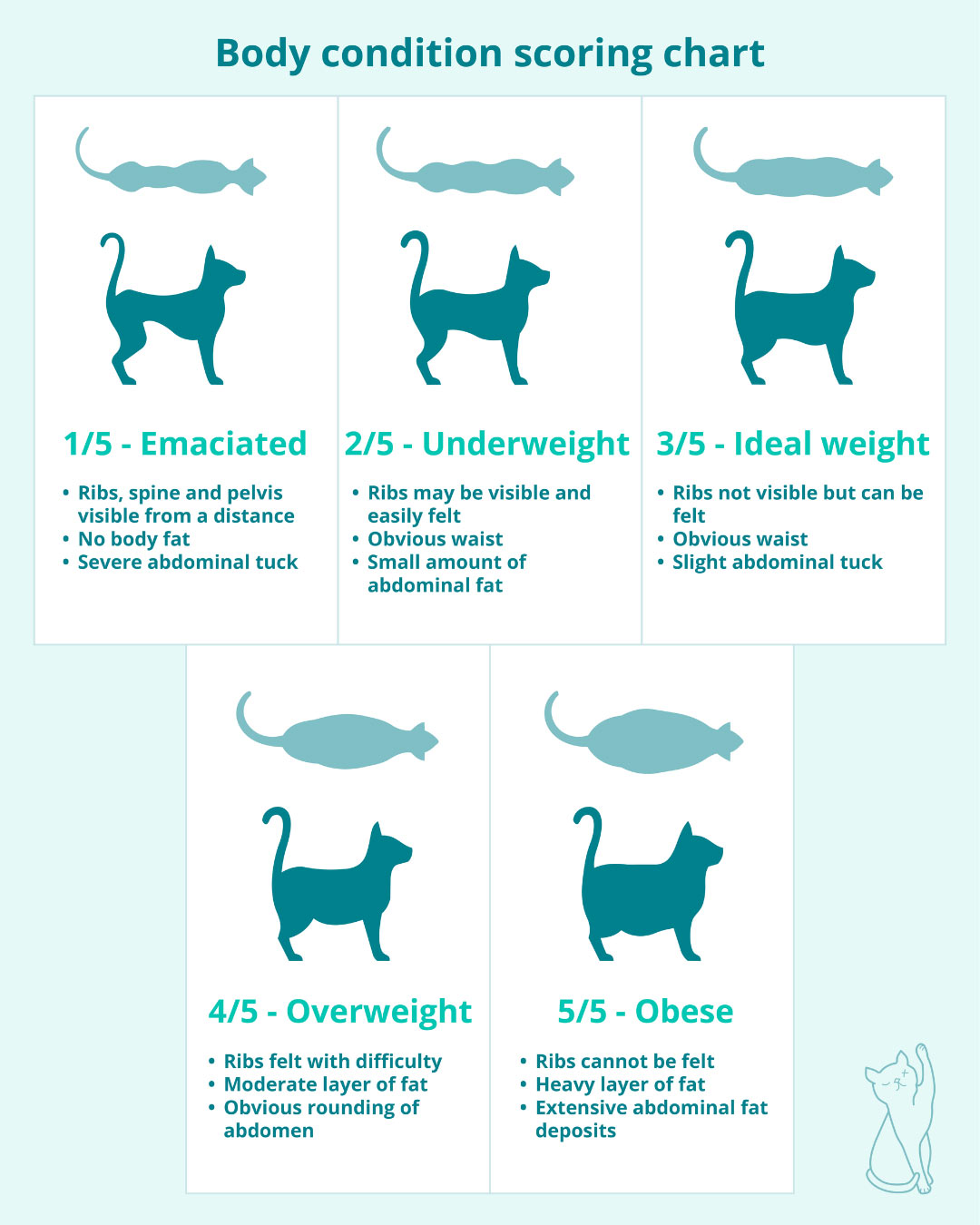
Rather than relying on kilograms alone, veterinarians use a Body Condition Score (BCS).
The Body Condition Score evaluates how much body fat a cat has by looking at and feeling:
If you’re unsure whether your cat is at their ideal weight, ask your veterinarian to perform a Body Condition Score assessment during their next visit.
Absolutely!
With the right nutrition, portion control, increased activity, and regular veterinary monitoring, most overweight cats can safely return to a healthy body condition.
Remember, weight loss takes time. Slow, steady progress is much safer than rapid weight loss.